We See Both Sides Of The Door
We work for landlords and we work for tenants. That means we turn up at a lot of flats where a repair has been reported four times and nothing has happened — and at a lot where a tenant never knew they could ask.
Most repair standoffs are not bad faith. They're a vague message, no photos, no dates, and nobody sure whose job it is. So this page sets out what the law puts on the landlord, and gives you the reporting method that gets things moving.
And for the jobs that genuinely are yours — shelves, flat-pack, blinds, a TV bracket — we'll do them at a flat price, and put the holes right before you move out.
What The Landlord Is Responsible For
This covers privately rented homes in England. Rules differ in Wales, Scotland and Northern Ireland, and social housing has its own routes.
The landlord must keep the structure and exterior in repair, along with heating, hot water, sanitary fittings and the installations for gas, water and electricity. That duty can't be signed away in your tenancy agreement.
Your home must be fit for human habitation throughout the tenancy — including freedom from serious damp, cold, disrepair and safety hazards. If it isn't, you can take the landlord to court to force repairs, and claim compensation.
Persistent damp and mould usually have a building cause: a leak, failed seals, cold bridging, or a missing or broken extractor fan. Ask in writing for the cause to be investigated, not just the mould wiped down.
The Renters' Rights Act 2025 extends Awaab's Law principles to the private rented sector: serious hazards such as damp and mould must be investigated and fixed to set timescales. The timescales are being brought in by regulation — check the current position before relying on a specific number of days.
You're entitled to a gas safety record for the last 12 months, an electrical inspection report (EICR) no more than five years old, a smoke alarm on every storey, and a CO alarm in any room with a fixed combustion appliance. Ask for copies — the landlord has to provide them.
From 1 May 2026, no-fault Section 21 evictions ended in England and assured shorthold tenancies became periodic. A landlord now needs a statutory ground to seek possession — so asking for a repair is a much smaller risk than it used to be.
A deposit must be protected in a government-approved scheme with the prescribed information given to you. And you're entitled to quiet enjoyment: reasonable written notice, normally at least 24 hours, before anyone visits.
The Act introduces a minimum standard for privately rented homes covering condition, warmth, safety and reasonably modern kitchens and bathrooms. Worth knowing about when you're viewing your next place.
Please note — this is a general summary for privately rented homes in England, current at the time of writing, and is not legal advice. Rules, commencement dates and timescales change, and your tenancy agreement matters. For advice on your own situation speak to Shelter, Citizens Advice, your local council's housing team or a solicitor. We're tradespeople, not advisers.
Four Steps That Actually Get It Fixed
From the side of the door we stand on: this is the version of a repair report that gets a tradesperson booked.
Put it in writing
Email or message, never just a phone call. Describe the fault, where it is, when it started. Keep your own copy — that record is what everything later rests on.
Send dated photos
A wide shot and a close-up. Mould, a stain spreading, a dripping joint — photos turn "it's damp again" into something a landlord can price and a council can act on.
Offer access and a deadline
Say when you're free. "Any evening this week or Saturday morning" removes the commonest excuse for delay, and makes it obvious if the hold-up isn't you.
Escalate if nothing happens
Chase once in writing. Then contact your council's private sector housing or environmental health team, and get free advice from Shelter or Citizens Advice.
A gas smell, no heat in winter, no water, an active leak, or a door that won't lock is an emergency, not a repair request. Report it immediately by phone and in writing. If you smell gas, call the National Gas Emergency Service on 0800 111 999 first and open the windows.
The Jobs That Are Yours To Do
Making a rented flat feel like yours, and handing it back without an argument. Flat prices, and extra jobs from £12 once we're already there.
Small furniture built and checked over. Wardrobes quoted separately.
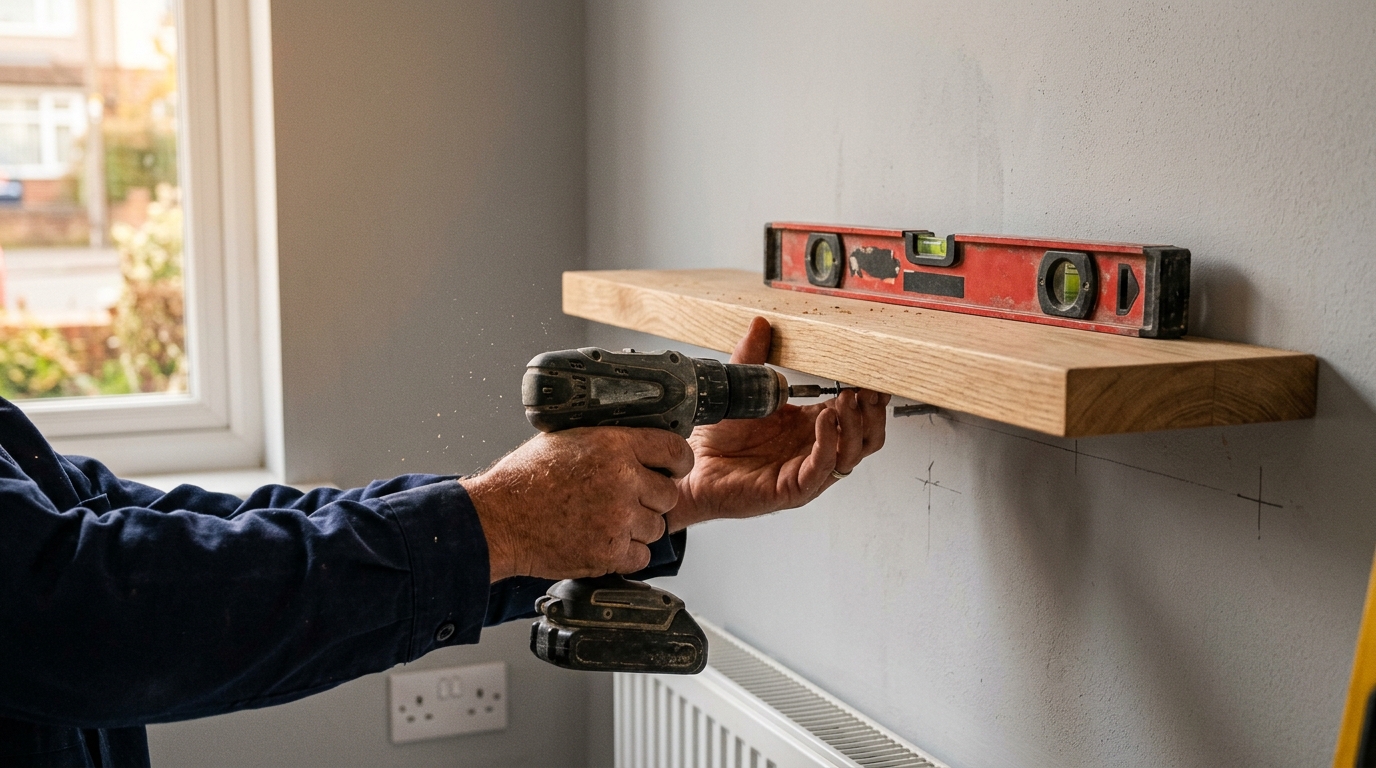
Hung level and load-ready, on any wall type.
Bracket fitted, cables tidied. Landlord's written permission needed.
Measured, fitted and working.
Holes filled, marks touched in, fixings removed. Cheaper than a deposit deduction.
Each small fix added while we're already on site.
Permission in an email costs nothing and settles the deposit conversation two years early. And if the job you need is actually the landlord's repairing obligation, tell us — you shouldn't be paying for it, and we'll say so.
All prices labour only, per job, across South East London and North Kent. Materials at cost + supply. We don't carry out work that alters a rented property without the landlord's written permission. Prices under London review — confirm at quote.
Who To Talk To — None Of Them Charge
Private sector housing or environmental health teams can inspect a property, assess hazards and serve notice on a landlord. Search your borough's name plus "private sector housing" — Greenwich, Lewisham, Bexley, Bromley, Southwark, Lambeth, Dartford and Gravesham all have a team.
Free housing advice and a national helpline, with detailed guidance on repairs, deposits, eviction and harassment. The first place to go if you've been threatened with losing your home.
Local offices and a national service covering tenancy agreements, rent, deposits and disputes — and help writing the letter if you're not sure how to word it.
If your deposit is in dispute, the scheme protecting it runs a free adjudication service. Check which one your landlord used — it should be in the prescribed information you were given at the start of the tenancy.
Renters' questions
My landlord won't fix a repair. What can I do?
Report it in writing, keep a copy, and give the landlord or agent a reasonable chance to put it right. If nothing happens, your council's private sector housing or environmental health team can inspect and serve notice on the landlord. Shelter and Citizens Advice both run free advice lines and can tell you what your next step should be. Photos with dates and copies of your messages are the evidence that makes any of it work.
Can I be evicted for asking for repairs?
No-fault Section 21 evictions ended in England on 1 May 2026, and retaliatory eviction protections existed before that. A landlord now needs a statutory ground to seek possession. If you've been threatened with eviction after reporting a repair, get advice from Shelter, Citizens Advice or your council straight away.
Is damp and mould my fault for drying washing indoors?
Not usually. Persistent damp and mould normally point to a building problem: failed seals, a leak, cold bridging, missing or broken extractor fans, or inadequate ventilation. Those are the landlord's to put right. Report it in writing with photos and ask for the cause to be investigated, not just the mould wiped off.
Who is responsible for the smoke alarm?
Your landlord must provide a smoke alarm on every storey and a carbon monoxide alarm in any room with a fixed combustion appliance, and they must be working at the start of the tenancy. If one fails during the tenancy, report it and the landlord must repair or replace it. Changing a battery is generally the tenant's job — report it if the unit itself is dead.
Do I have to let the landlord in?
You're entitled to quiet enjoyment of your home. A landlord or their contractor should give reasonable notice in writing — usually at least 24 hours — and visit at a reasonable time. Refusing all access is risky, though: if a repair or a safety check can't be done because nobody will let anyone in, that can count against you.
Can I do repairs myself and take it off the rent?
Not without care. Set-off against rent is a legal route with strict conditions, and getting it wrong can put you in arrears. Get advice from Shelter or Citizens Advice before withholding anything. Small improvements you simply want for yourself are a different matter, and usually just need the landlord's written permission.
Can I hire you directly as a tenant?
Yes, for anything that's genuinely yours to do: flat-pack assembly, hanging shelves and pictures, blinds, a TV bracket, appliance installs. For anything that's the landlord's repairing obligation, or that alters the property, get their written permission first — we'll ask you whether you have it before we start.
Will you tell my landlord I called you?
No. If you instruct and pay us, you're our customer and the job is between us. If your landlord instructs us, we report to them. We don't mix the two up.
How much does it cost to get a few small jobs done?
We charge flat rates, not an hourly rate, and once we're booked in you can add small extra jobs to the same visit from £12 each. For renters that's usually the cheapest way to deal with a list: book the biggest job and bundle the rest.
Will drilling holes cost me my deposit?
It depends on your tenancy agreement and whether you had permission. Ask the landlord in writing first, keep the reply, and have the work done properly — a neat, correctly fixed shelf argued over at check-out costs far less than a botched one. We can also make good and fill holes before you move out.
Renters across South East London and North Kent
London boroughs
Kent — Ebbsfleet corridor
Not sure if we cover your postcode? Ask on WhatsApp →
Other services in London & North Kent
Got A Job That's Yours To Do?
Send us a photo on WhatsApp. Flat price back, no hourly meter — and extra jobs from £12 to clear the rest of the list while we're there.